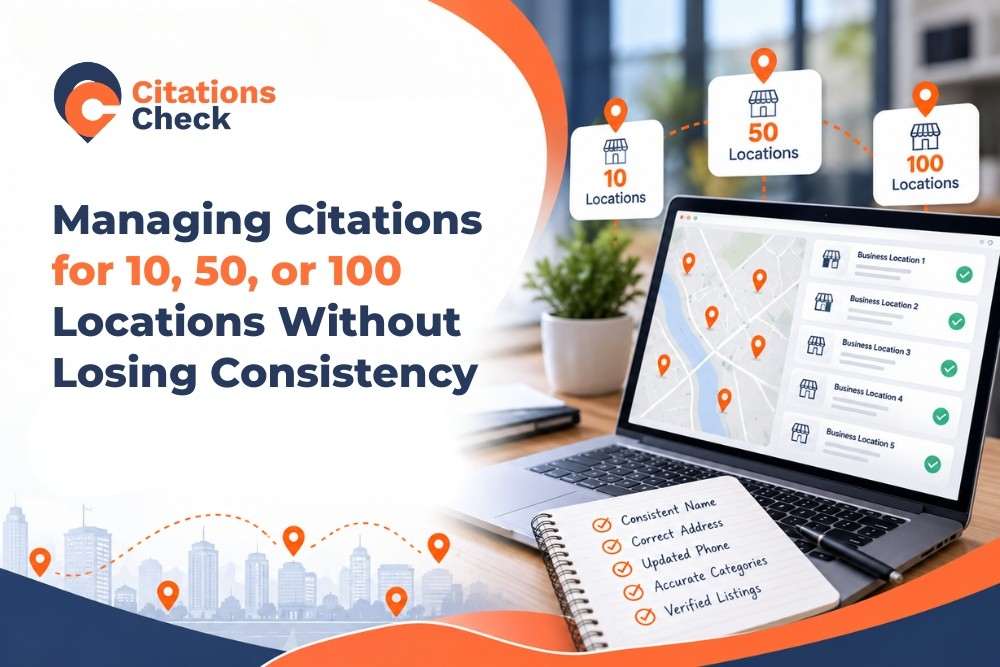
A single wrong digit in a telephone number can derail foot traffic across fifty storefronts overnight. Multi-location enterprises frequently battle messy branch records, stray map pins, and outdated operating schedules. When your branch count multiplies, small clerical oversights quickly compound into major algorithmic penalties. Investing in dedicated local citation services shields your brand from data fragmentation and secures steady local pack rankings.
Search algorithms cross-examine hundreds of third-party directories before verifying a business location. Conflicting street titles or mismatched postal codes dilute your entity authority across geographic markets. Recent 2026 local search research shows that most consumers lose trust in local brands when business directories display inaccurate branch details. Disorganized data confuses prospective shoppers and directly damages local footfall.
Scale introduces severe complexity for franchise networks and regional chains. Managing regional listings manually inside messy spreadsheets invites clerical errors and rogue duplicates. Teams need a repeatable, disciplined system for organizing listings at scale across national map engines and local discovery portals. High-performing multi-unit brands replace disconnected manual edits with centralized, systematic data syndication.
Many expanding businesses rely on fragmented agency retainers or ad-hoc spreadsheet updates. They update listings only after customers submit complaints about wrong directions. Modern multi-location organizations adopt proactive digital governance to outpace regional competitors. The comparison below clarifies why centralized entity management protects local revenue far better than legacy routines.
| Strategic Dimension | Legacy Manual Listing Management | Centralized Enterprise Governance | Commercial Business Impact |
| Data Integrity | Fragmented sheets updated ad-hoc | Single validated master database | Eliminates conflicting address pins |
| Duplicate Handling | Reactive reviews after index drops | Automated scanning and suppression | Recovers lost local pack visibility |
| Directory Reach | Scattered submissions on tier-three sites | Tiered syndication across top aggregators | Boosts search engine entity confidence |
| Update Velocity | Weeks spent editing individual fields | Instant multi-platform sync | Protects holiday revenue and special hours |
Regional brands often encounter silent listing decay as branch counts expand. When physical branches relocate or adjust their trading hours, legacy directories retain outdated profiles. Search engines interpret these conflicting signals as poor reliability, depressing local search prominence.
Watch for these primary listing hazards across your portfolio:
Expanding brands must establish dependable operational routines for maintaining consistency across locations in every regional territory. Resolving these discrepancies strengthens geographical signals and fuels sustainable local conversions.
Scaling from a handful of stores to a nationwide footprint demands strict procedural hygiene. A unified implementation blueprint prevents data drift before records hit major indexers. Follow this structured roadmap to orchestrate branch data across complex markets.
A fast-growing dental group expanded across two neighboring states by acquiring independent regional clinics. The previous owners left dozens of active directory listings under their retired practice names. New patients frequently drove to abandoned office suites, triggering negative online feedback and missed appointments.
Citations Check implemented an exhaustive location audit across all twenty-five territories. Our team merged eighty-two orphaned listings, standardized provider names, and published uniform office hours. Within sixty days, organic map impressions climbed by 41%, filling appointment calendars across newly acquired branches.
A regional hardware cooperative operated eighty retail hubs with varied naming conventions across local phone books. Some stores appeared under historical family names, while others displayed the parent franchise trademark. This divergence confused search algorithms, causing the entire cooperative to vanish from local 3-pack search rankings.
Our specialists deployed unified entity syndication to standardize all eighty profiles into a coherent hierarchy. We eliminated overlapping digital duplicates and tied each physical branch to its verified primary category. The cooperative reclaimed top-three map rankings in sixty-eight service zones within four months, driving significant weekend store visits.
Keeping your digital footprint spotless requires continuous attention rather than a one-time push. High-growth enterprises rely on structured quarterly check-ins to catch drift early. Keep your internal marketing teams aligned by following this simple operational checklist.
Sustained local dominance comes from meticulous record management and unwavering accuracy. Protecting your multi-location data shields your enterprise reputation and ensures nearby shoppers find your doors effortlessly. Partner with the specialists at Citations Check for end-to-end local citation services that drive lasting organic foot traffic.
What Are The Risks Of Having Inconsistent Citations Across Multiple Locations?
Inconsistent citations split your domain authority, reduce local pack rankings, and misdirect prospective buyers toward closed doors. Search engines prioritize verified businesses that present uniform data across multiple independent web directories. Address mismatches introduce machine doubt, causing search algorithms to favor clearer, better-organized competitors.
How Do Data Aggregators Impact Multi-Location Local SEO?
Data aggregators serve as primary information clearinghouses for global search platforms, automotive dashboards, and local web directories. When aggregators hold verified store data, they syndicate that accuracy across thousands of connected satellite applications automatically. Conversely, feeding aggregators outdated records quickly pollutes the entire local search web with conflicting signals.
Should Every Franchise Location Have Its Own Unique Phone Number?
Yes, every individual branch should display its own dedicated local phone number with a matching area code. Local telephone prefixes signal genuine community roots to regional ranking algorithms and reassure local callers. You can still route inbound phone traffic through sophisticated centralized call software behind the scenes.
How Often Should A Growing Brand Audit Its Multi-Location Citations?
Multi-location brands should perform automated citation audits monthly and comprehensive manual data cleanups every quarter. Automated monthly checks detect rogue duplicates spawned by user edits before they siphon foot traffic. Quarterly reviews verify that holiday schedules, staff additions, and seasonal offerings match your master records.
Can Centralized Citation Services Manage Separate Store Hours For Holidays?
Yes, professional citation services push special holiday hours simultaneously across hundreds of local search profiles. Advanced syndication systems push special opening schedules without disturbing standard weekly routines. Updating these temporal attributes prevents disappointed shoppers from arriving at closed storefronts during peak holiday trading seasons.